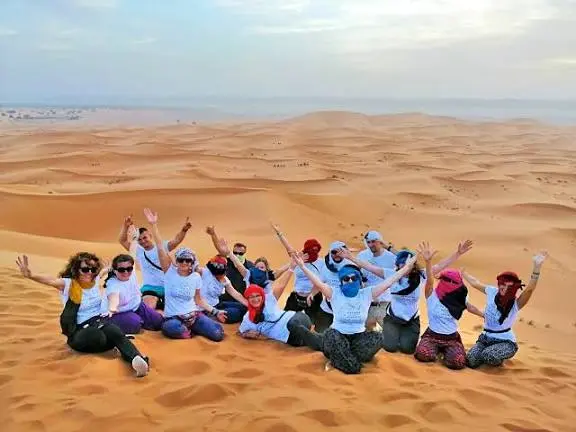
Morocco student tours are some of the most rewarding journeys a school, college or university group can take. In one or two weeks, students walk through Roman ruins, medieval medinas listed by UNESCO, mountain villages and the dunes of the Sahara, practise their French and learn a few words of Arabic and Tamazight. Morocco is a short flight from Europe, welcoming to young visitors and easy to travel around with a planned program, which is why so many schools choose Morocco student trips over other destinations.
This guide is for teachers, group leaders and students planning a trip: the best routes, what each one teaches, how to organize a group, the best time to go and what students should know before they fly.
In this guide
Why Morocco student tours work so well
Few countries pack so many subjects into such a short distance. A single week can cover history, geography, languages, religion, architecture and food, all seen first hand instead of in a textbook.
- History: the Roman city of Volubilis, the imperial cities of Fes, Meknes, Rabat and Marrakech, and the kasbahs of the south.
- Geography: the High Atlas Mountains, river valleys and oases, and the edge of the Sahara at Merzouga, all on one road trip.
- Languages: Arabic, Tamazight and French are spoken every day, and many people in tourism speak English and Spanish too. It is a living lesson for language classes.
- Culture and religion: students can visit the Hassan II Mosque in Casablanca, one of the few mosques in Morocco open to non Muslim visitors on a guided tour, and see how daily life works in a medina.
- Crafts and environment: tanneries, pottery and weaving workshops, and women’s argan oil cooperatives show how traditional work and local economies fit together.
The best routes for Morocco student tours
The right route depends on the subject, the age of the students and the number of days. These four work well for most school and college groups.
| Route | Days | Best for | Highlights |
|---|---|---|---|
| Imperial cities | 5 to 7 | History, architecture, religion | Rabat, Meknes, Volubilis, Fes, Casablanca |
| Marrakech, the Atlas and the Sahara | 6 to 8 | Geography, landscapes, culture | Atlas villages, Ait Benhaddou, Dades Valley, Merzouga dunes |
| The north and the coast | 5 to 7 | Languages, culture, a calmer pace | Tangier, Chefchaouen, Asilah, Rabat |
| The grand tour | 10 to 14 | A complete first visit | Imperial cities, the Sahara, Marrakech and the Atlas |
Most student trips to Morocco start in Casablanca or Marrakech, the two main airports for flights from Europe and North America. For a shorter school trip, the route from Marrakech over the Atlas to the desert gives students the most variety in the fewest days. Our guide to the best things to do in Morocco describes each stop in more detail.
Our own local agency runs a tour on each of these routes, and every one can be planned for a school or college group: the one week tour from Casablanca for the imperial cities, Volubilis and a night in the Sahara, the 3 day desert tour from Marrakech over the Atlas, the 5 day tour from Tangier for the north and Chefchaouen, and the 13 day Morocco tour for the grand tour.
What students learn on each stop
Here is how the main stops turn into lessons, so you can match them to your curriculum.
- Volubilis. A Roman city with mosaics still in place. Students see how far the Roman Empire reached and why it settled in North Africa.
- The medina of Fes. One of the largest car free urban areas in the world, with craft quarters that still work much as they did centuries ago. Our Fes travel guide covers the main sights.
- The High Atlas. Terraced fields, Amazigh villages and mountain rivers. A local guide can explain how villages manage water and farming at altitude.
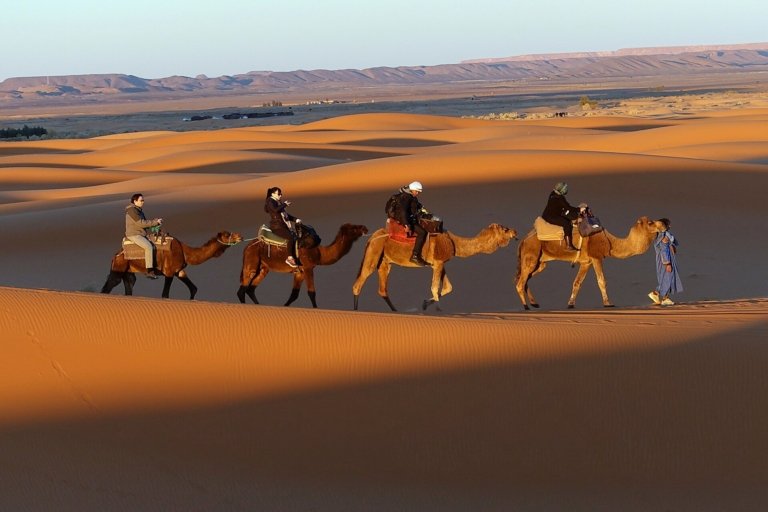
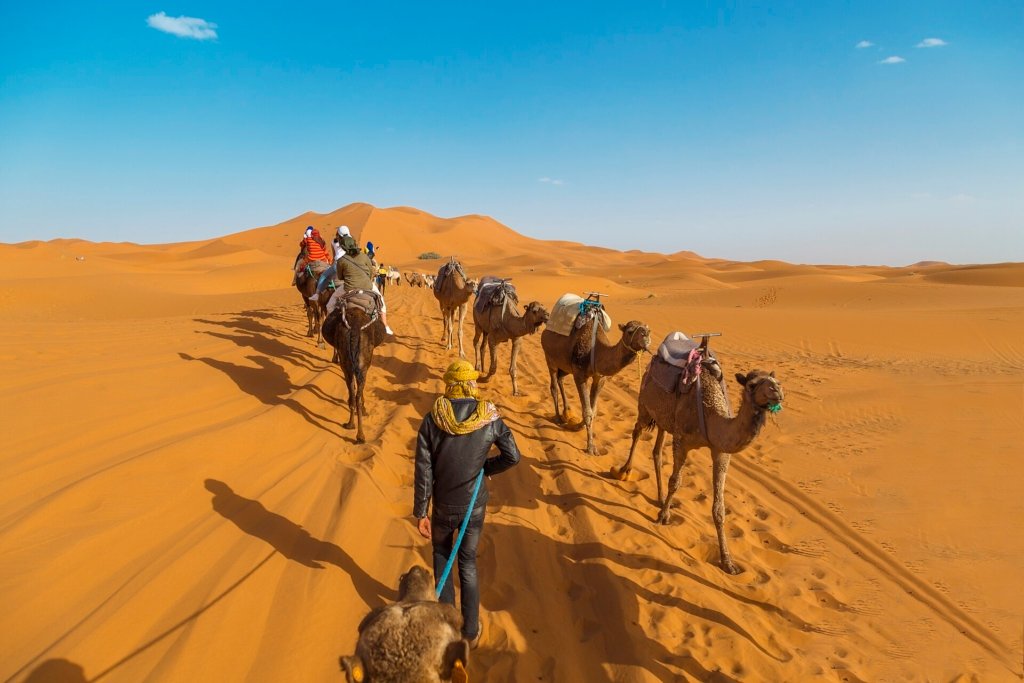
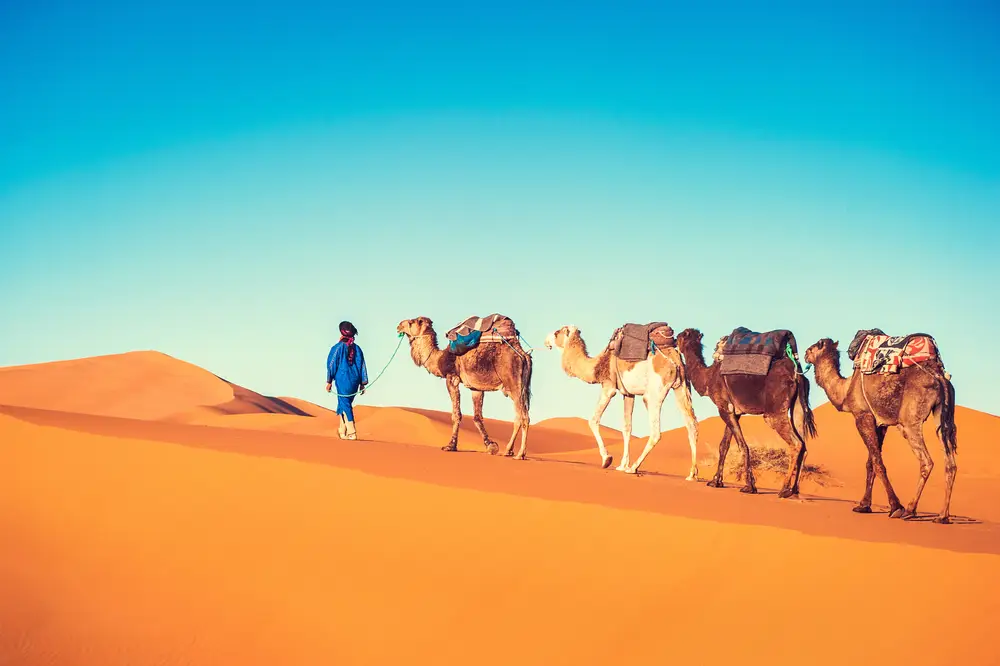
- The Sahara at Merzouga. Dunes, desert camps and oases. A night in a camp under the stars is often the moment students remember most. See our Merzouga and Sahara guide.
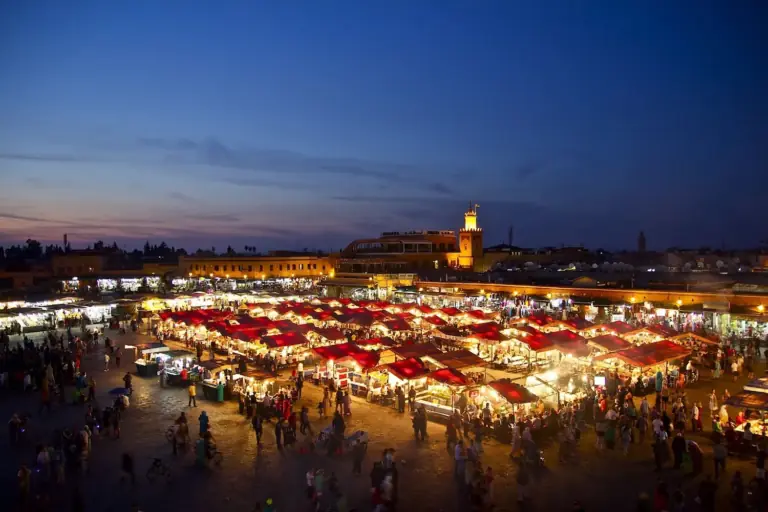
- Marrakech. Souks, palaces and Jemaa el Fna square at sunset, plus a cooking class that turns lunch into a lesson. Our list of the best things to do in Marrakech Morocco helps you choose the visits.
Planning a group: rooms, transport and the program
Students trips in Morocco run most smoothly when the whole program is planned before the group arrives, and the best Morocco student tours leave nothing to chance on the road. These are the points every group leader should settle early:
- One contact. One teacher or leader speaks with the travel company and shares the dates, the number of students and staff, ages and any special needs.
- Rooms. Riads are small and full of character, so a large group may need two riads close together, or a hotel. Ask for rooms grouped on the same floors for supervision.
- Transport. Groups travel best in their own vehicles: a minibus or several cars that travel and stop together, so nobody is left behind. On our group trips the cars and drivers stay with the group for the whole route.
- Guides. Licensed local guides in the medinas of Fes and Marrakech keep the group together in the lanes and turn each visit into a story.
- Food. Moroccan food is halal, and vegetarian meals are easy to arrange. Share allergies and diets in advance so restaurants and camps can prepare.
- Free time. Plan short, supervised free time in safe, busy areas, and a clear meeting point at every stop.
College and university groups
Colleges and universities often run longer, faculty led trips of two to three weeks, with lectures on the road and a journal or project for each student. A longer program gives time for the whole country: the imperial cities, the Atlas, the Sahara, the coast and the north.
- Travel by road. A private minibus turns the drive into part of the course, with stops for viewpoints, villages and short talks along the way.
- Mix cities and nature. Two or three nights in each base, such as Fes, Marrakech and the desert, keeps the pace calm and leaves time for study.
- Meet local experts. Guides, craftsmen, farmers and cooperative members can explain their work to the group, which adds depth to any subject.
If the group arrives in summer, remember that July and August are very hot inland and in the desert. Plan the Sahara for early morning and evening, and spend the middle of the day in the shade. Our guide to the best time to visit Morocco shows what each season is like.
The best time for Morocco student tours
Spring, from March to May, and autumn, from September to November, are the most comfortable seasons for a school trip, with mild days in the cities and pleasant nights in the desert. Spring break is a popular choice for schools and colleges. Winter is fine for the cities, but nights in the Atlas and the Sahara are cold, so pack warm layers. If your dates fall during Ramadan, the trip still works well: many restaurants for visitors stay open, and breaking the fast at sunset can be a memorable cultural experience.
Student travel Morocco: what to know before you go
A short briefing before the trip helps students feel confident and respectful from the first day.
- Passports: US citizens do not need a visa for visits of up to 90 days, and passports should be valid for at least six months. Check the rules for every nationality in the group.
- Dress: light clothes that cover the shoulders and knees are respectful and comfortable in the sun.
- Photos: students should always ask before photographing people. Most will say yes with a smile.
- Phones: an eSIM keeps everyone connected from the moment they land. Our Morocco SIM card guide explains the options.
- Money: small notes in dirhams for snacks and souvenirs, and a little practice in friendly bargaining in the souks.
- A few words of Darija: “salam” (hello), “shukran” (thank you) and “la, shukran” (no, thank you) go a long way.
For the bigger picture, our Morocco 101 travel guide covers money, transport and customs for first time visitors.
Questions about Morocco student tours
Is Morocco a good destination for a school trip?
Yes. Morocco is welcoming to young visitors, close to Europe, and full of subjects students can see for themselves. With a planned program, private transport and local guides, it is one of the most rewarding school trips abroad.
How long should students tours to Morocco be?
A week is enough for one region, such as the imperial cities or Marrakech and the Sahara. Ten to fourteen days covers the whole country at a comfortable pace for a group.
What do students trips in Morocco usually include?
Most planned trips include transport in private vehicles, accommodation with breakfast, local guides in the medinas, a night in a desert camp and some educational visits, such as Volubilis, a craft workshop or a cooking class.
Whatever the subject, Morocco student tours are easiest with a local team that knows the roads, the guides and the riads, so teachers can focus on the students.
Plan your student trip with our local team
These four routes are popular with school and college groups, from a short desert trip to a full tour of the country. Each one can be planned around your program, your dates and the size of your group, with vehicles and rooms for everyone. See more routes for groups on our Morocco group tours page. These tours are run by Travel to Morocco, our own local travel agency in Marrakech. We plan every trip ourselves, with drivers, guides and desert camps we know and trust. An organised tour simply makes Morocco easier: your driver knows every road and mountain pass, your riads and desert camps are booked before you arrive, you skip bus timetables and taxi haggling, and a local team is there to help from your first day to your last.


5 days / 4 nights
5 days tour from Tangier to Merzouga desert
Tangier, Fes, Merzouga, Chefchaouen, Tangier