The best things to do in Morocco are walking the old medinas of Marrakech and Fes, spending a night in the Sahara at Erg Chebbi, hiking in the Atlas Mountains, and visiting landmarks like the Hassan II Mosque and the Roman ruins of Volubilis. Add a hammam, a cooking class and a slow glass of mint tea, and you have the heart of a first trip.
The real challenge is not finding things to do. It is choosing, because Morocco is bigger than most visitors expect and the highlights sit hours apart. Below, every experience comes with the time it really takes and the best season for it, so you can build a trip that feels full but not rushed.
Things to do in Morocco at a glance
| Experience | Where | Time needed | Best season |
|---|---|---|---|
| Walk an old medina | Marrakech, Fes, Chefchaouen | 1 to 2 days per city | October to May |
| Night in the Sahara | Erg Chebbi, near Merzouga | 2 to 3 days from Marrakech or Fes | October to April |
| Hike in the Atlas Mountains | Imlil, Toubkal National Park | 1 to 2 days | April to October |
| Hassan II Mosque | Casablanca | 1 to 2 hours | All year |
| Roman ruins of Volubilis | Near Meknes | A morning | Spring and autumn |
| Ait Benhaddou kasbah | Near Ouarzazate | 2 to 3 hours | Spring and autumn |
| Surf lesson | Taghazout, Essaouira | 1 day or more | September to April |
| Hammam | Every city | 1 to 2 hours | All year |
| Cooking class | Marrakech, Fes | 3 to 4 hours | All year |
Summer is not off limits, but inland heat makes the desert and the cities hard work from June to August. Our guide to the best time to visit Morocco explains how each season changes your plans.
Get lost (on purpose) in the old medinas
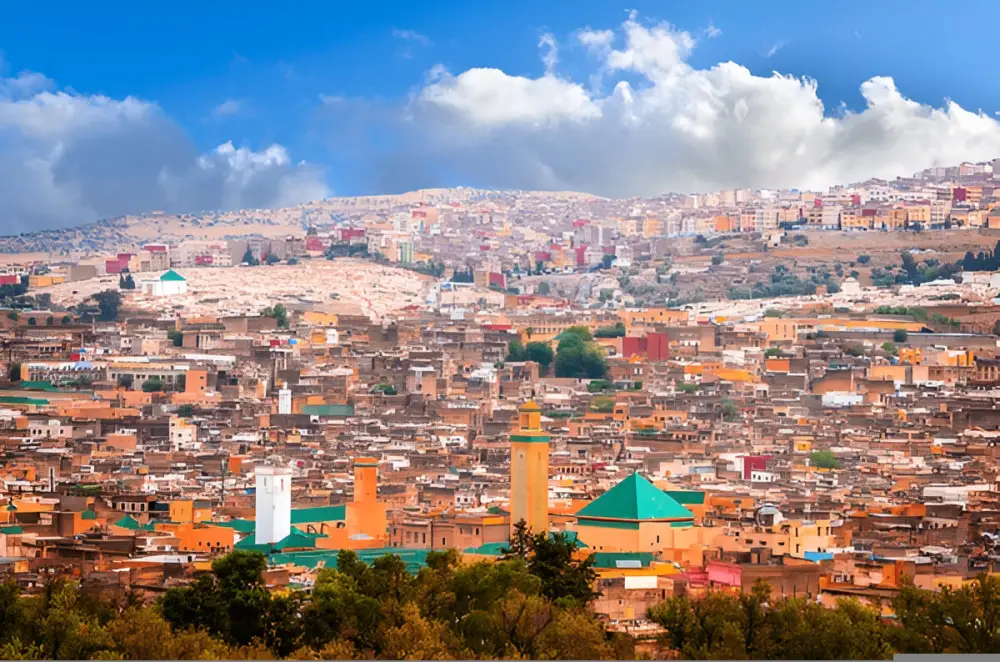
A medina is the walled old town at the center of a Moroccan city. Streets are narrow, cars mostly cannot enter, and daily life happens in the open: bakers, tanners, coppersmiths, kids heading to school. For many visitors, this is the moment Morocco stops feeling like a photo and starts feeling real.
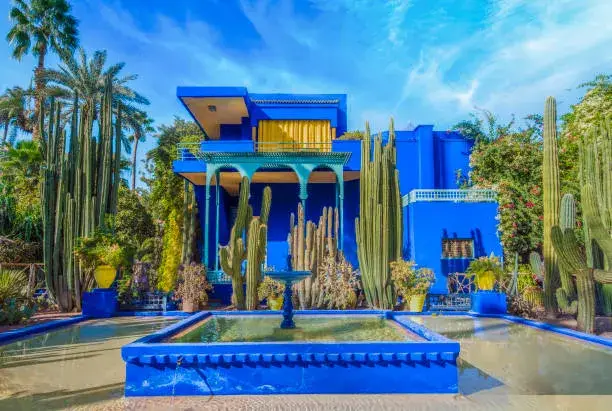
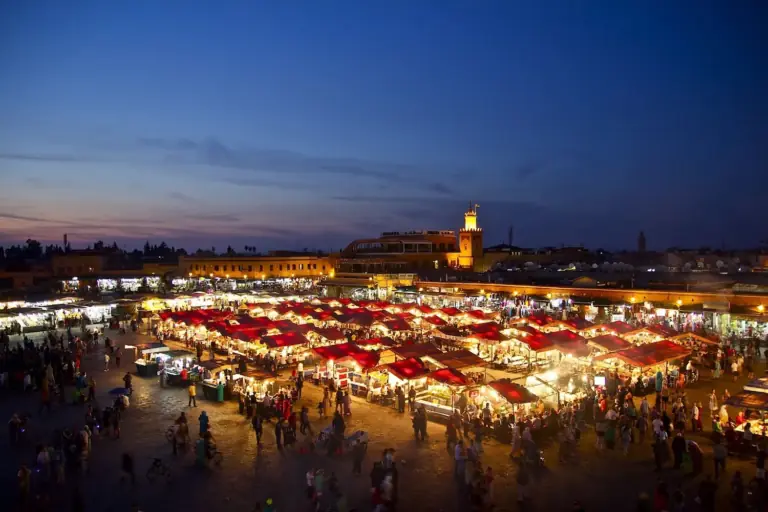
Marrakech is the busiest and the most theatrical. The center of it all is Jemaa el Fna, a huge square that changes through the day. Mornings are quiet with juice stalls, and by sunset it fills with food grills, musicians and storytellers. Nearby, the Bahia Palace and the Ben Youssef Madrasa show off the carved cedar, painted ceilings and tilework Morocco is famous for. Jardin Majorelle, the cobalt blue garden linked to Yves Saint Laurent, sells timed tickets online, and slots go fast in busy months, so book through the official Jardin Majorelle website before you go.
Fes feels older and less polished. Its medina, Fes el Bali, is a UNESCO World Heritage site and one of the largest car free urban areas in the world. Highlights include the Chouara tannery, seen from the leather shops’ terraces above, and the Bou Inania Madrasa. Fes rewards a local guide more than anywhere else, simply because the lanes are so tangled.
Chefchaouen, in the Rif Mountains, is the calm one. Its blue walls are the draw, but the slower pace is the real gift after a few days in Marrakech or Fes. One full day is enough for most people, two if you want a hike to the Spanish Mosque viewpoint at sunset.
Spend a night in the Sahara Desert
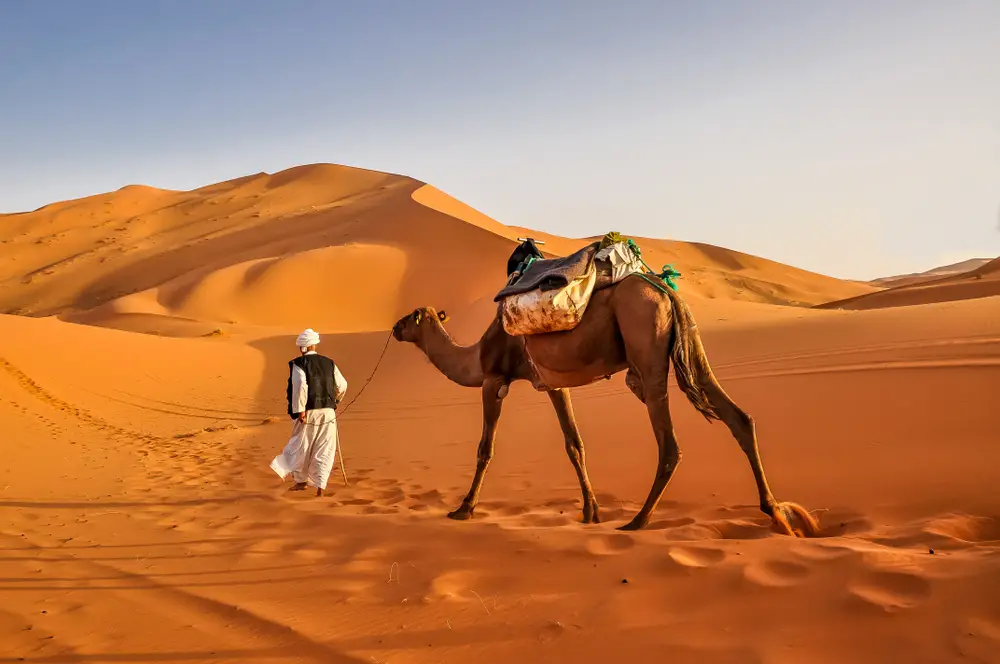
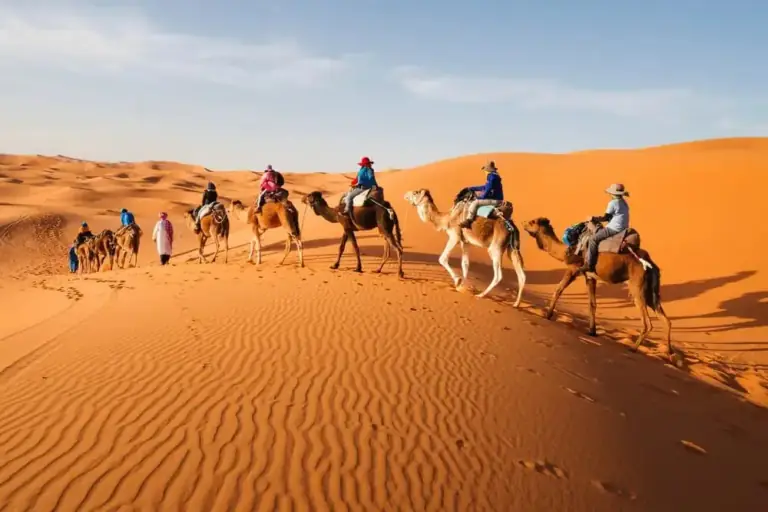
A night in the dunes sits near the top of most lists of things to do in Morocco, and for many travelers it is the single best memory of the trip. The classic spot is Erg Chebbi, near the village of Merzouga, where orange sand dunes rise to around 150 meters above the flat, stony desert around them.
A typical desert visit looks like this: a camel ride or a walk into the dunes in the late afternoon, sunset from a ridge, dinner and music at a camp, a sky full of stars, and an early start for sunrise. Camps range from simple tents to comfortable glamping with private bathrooms.
The catch is distance. Merzouga is about 550 km from Marrakech, roughly 9 hours on the road without stops, crossing the High Atlas on the Tizi n’Tichka pass. That is why most visitors book a 3 day trip from Marrakech or a 2 to 3 day trip from Fes, breaking the drive with stops in the Dades Valley or Todra Gorge. Our Merzouga and Sahara Desert guide covers camps, seasons and what to pack.
Hike in the Atlas Mountains
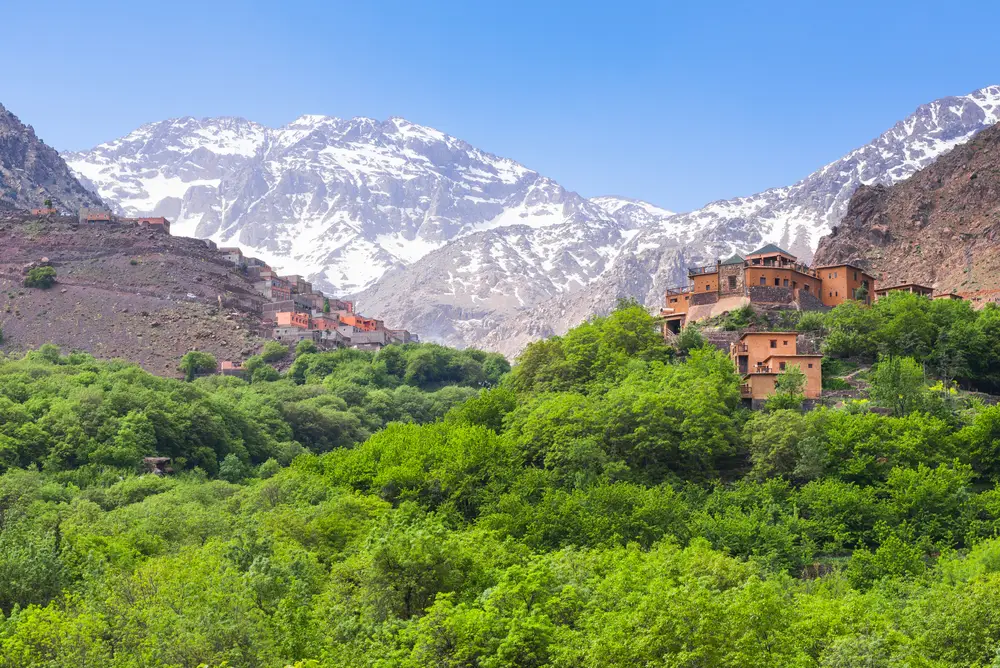
The High Atlas starts about an hour south of Marrakech, and it offers a complete change of scene: Amazigh (Berber) villages built from earth and stone, walnut trees, terraced fields and snowy peaks for much of the year.
- Imlil is the base for most walks and for Mount Toubkal, North Africa’s highest peak at 4,167 meters. The summit usually takes two days with a night in a mountain refuge, and you need reasonable fitness, not climbing skills, in the warmer months.
- Easy day walks from Imlil lead through villages and valleys without any summit pressure, which suits families and casual walkers.
- Ouzoud Waterfalls, around three hours from Marrakech, are the tallest falls in the country and a good half day out of the city heat.
Winter brings snow to the high trails, so treat a Toubkal climb from December to March as a serious mountain trip that needs a guide and proper gear. For most visitors, the easiest way to see the Atlas is a private day trip from Marrakech with a driver who knows the mountain roads and can stop at the villages along the way.
Sites to visit in Morocco for history and architecture
If you love buildings and history, these are the sites to visit in Morocco that are worth planning a route around:
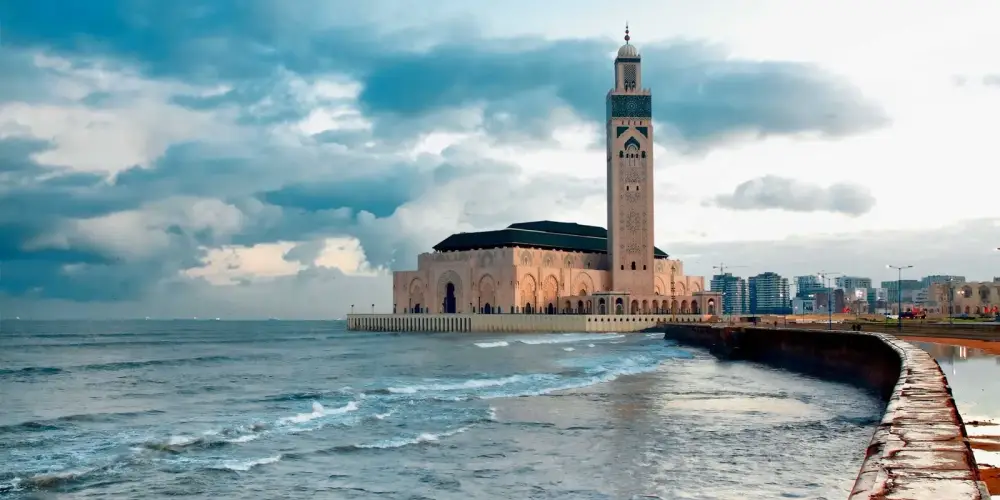
- Hassan II Mosque, Casablanca. One of the largest mosques in the world, set on the ocean edge, and one of the few in Morocco open to non Muslims. Visits are by guided tour only, outside prayer times, with shoulders and knees covered. Check current tour times on the Hassan II Mosque Foundation site, especially on Fridays and during Ramadan.
- Volubilis, near Meknes. Well preserved Roman ruins with mosaic floors still in place, listed by UNESCO. Go early, since there is very little shade.
- Ait Benhaddou, near Ouarzazate. A fortified earthen village on a hillside, another UNESCO site and a regular film set. It fits easily into the drive between Marrakech and the desert.
- Ben Youssef Madrasa and Bahia Palace, Marrakech. The best places to see traditional carved plaster, cedar and zellige tilework up close.
- Kasbah of the Udayas, Rabat. A quiet blue and white neighborhood above the Atlantic, often skipped by visitors who rush past Rabat.
Ticket prices change often and different sources rarely agree, so we suggest checking each site’s official page or asking your riad the day before.
Activities to do in Morocco beyond sightseeing
Some of the most memorable activities to do in Morocco have nothing to do with monuments:
- Go to a hammam. The steam bath is a weekly ritual for Moroccans. You can choose a simple local hammam, where you bring your own black soap and glove, or a spa hammam with a scrub and massage in a hotel or riad. Spa versions are easier on a first visit.
- Take a cooking class. Classes in Marrakech and Fes usually start with a market visit and end with lunch: tagine, salads and bread. It is a fun way to understand what you have been eating all week.
- Shop the souks. Leather, ceramics, rugs, lanterns and spices are the classics. Haggling is expected, so stay friendly, decide your price in advance, and walk away politely if it does not work.
- Learn to surf. Taghazout, north of Agadir, is Morocco’s surf village, with easy beginner waves from autumn to spring. Essaouira is windier and better known for kitesurfing.
- Share mint tea. It is offered in homes, shops and riads as a sign of welcome. Accepting a glass is polite, and it often turns a quick stop into a conversation.
Best places to visit in Morocco by travel style
There is no single list of the best places to visit in Morocco, because it depends on what kind of trip you want:
- First trip, limited time: Marrakech plus the Atlas Mountains, or Marrakech plus a desert trip.
- Culture and history: Fes, Meknes and Volubilis, with Chefchaouen as a calm break.
- Nature and landscapes: the Sahara, the Dades and Todra gorges, and the High Atlas.
- Coast and slower travel: Essaouira, Taghazout and Agadir.
For a deeper look at each city, see our guide to the best Morocco cities for a first trip, or browse all our Morocco destination guides by region.
Morocco: what to see and do on one trip
The easiest way to plan Morocco what to see and do lists is by region, because traveling between regions takes time. A rough guide for a first visit:
- Marrakech and the Atlas: 3 to 4 days
- The desert (via Ait Benhaddou and the gorges): 3 days as a loop from Marrakech
- Fes and Chefchaouen: 3 to 4 days
- Casablanca or Rabat: 1 day, often on arrival or departure
The most comfortable way to link these regions is with a private driver. You leave when you want, stop for photos, lunch or a kasbah along the way, and your bags stay in the car from your first riad to your last. It also covers the places public transport cannot reach well, since the desert and the mountains have no trains at all. Trains do run between a few big northern cities, so they can work for a single city to city hop, but for a trip that mixes cities, mountains and the Sahara, a driver saves you hours of connections.
With 7 days, pick two regions. With 10 to 14 days, you can link Marrakech, the desert and Fes in one loop without rushing.
Is Morocco worth visiting?
Yes. Few countries this close to Europe and the US East Coast give you this much variety in one trip: ancient cities, the Sahara, high mountains and the Atlantic coast, with food and hospitality that many travelers remember long after the photos. Morocco is also a well established destination with a wide choice of riads and plenty of experienced local drivers and guides who can take care of the travel for you.
It is worth knowing a few common mistakes before you go:
- Trying to see everything. The distances are real. Two or three regions done well beat five done in a hurry.
- Visiting the desert in midsummer. Daytime heat in July and August can be extreme in the Sahara.
- Skipping a guide in Fes. One guided morning makes the rest of your stay far easier.
- Not dressing for the culture. Covering shoulders and knees makes mosque visits, medinas and rural villages more comfortable for everyone.
Your next step for planning a Morocco trip
Start by choosing your season, then pick the things to do in Morocco that matter most to you from the table at the top of this guide, and group them into two or three regions. Once you know when you are going, our guide to the best time to visit Morocco helps you match each experience to the right month, and the destination guides fill in where to stay and what to see in each city.